nightglow.info – Grasshoppers, with their powerful legs and characteristic chirping, are a familiar presence in grasslands and meadows around the world. These insects, belonging to the order Orthoptera, are more than just a background sound of summer; they play significant roles in ecosystems and have fascinating life histories. This article explores the world of grasshoppers, from their anatomy and behavior to their ecological significance and interactions with humans.
Physical Characteristics: Built for Leaping and Chewing
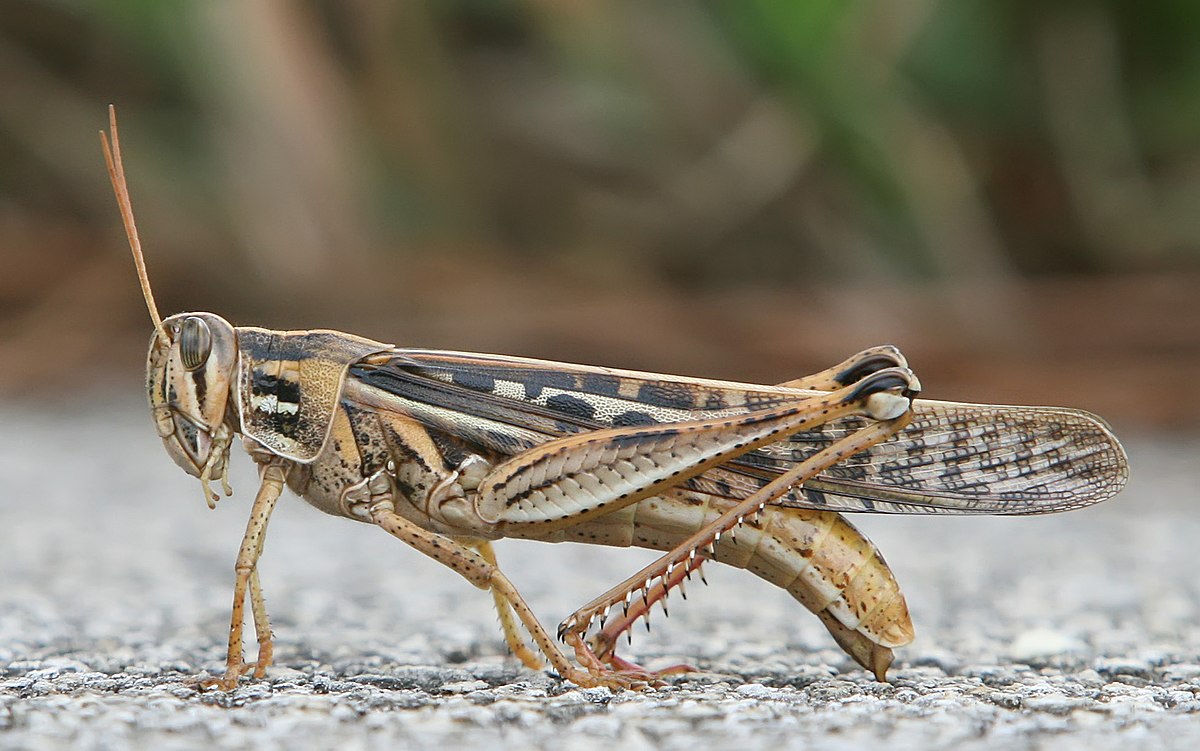
Grasshoppers possess several key physical features that distinguish them:
- Powerful Hind Legs: Their enlarged hind legs are specialized for jumping, allowing them to escape predators and move quickly through their environment.
- Chewing Mouthparts: Grasshoppers have strong chewing mouthparts adapted for consuming plant matter.
- Two Pairs of Wings: They have two pairs of wings: a leathery outer pair (tegmina) that protects the delicate membranous inner wings used for flight.
- Large Compound Eyes: Their large compound eyes provide a wide field of vision, helping them detect predators and navigate their surroundings.
- Antennae: They have relatively short antennae compared to other insects like crickets or katydids.
Life Cycle: Incomplete Metamorphosis
Grasshoppers undergo incomplete metamorphosis, also known as hemimetabolism, which consists of three life stages:
- Egg: Eggs are typically laid in the soil in pods, often in late summer or fall.
- Nymph: The eggs hatch into nymphs, which resemble smaller versions of the adults but lack fully developed wings. Nymphs molt several times as they grow, gradually developing wing pads.
- Adult: After several molts, the nymph reaches the adult stage, with fully developed wings and reproductive organs.
Diversity and Classification: A World of Grasshoppers
Grasshoppers belong to the suborder Caelifera within the order Orthoptera. There are thousands of species worldwide, exhibiting variations in size, color, and behavior. Some notable groups include:
- Short-horned Grasshoppers (Acrididae): The most common type of grasshoppers, characterized by their short antennae.
- Locusts: Certain species of short-horned grasshoppers can form large swarms under specific environmental conditions, becoming locusts and causing significant agricultural damage.
Habitat and Distribution: From Meadows to Deserts
Grasshoppers are found in a wide range of habitats, primarily grasslands, meadows, and open fields. They are distributed globally, except for Antarctica.
Feeding and Diet: Primarily Herbivorous
Grasshoppers are primarily herbivorous, feeding on a variety of plants, including grasses, leaves, and crops. Some species may occasionally consume other insects.
Behavior and Communication: Chirping and Leaping
Grasshoppers exhibit several interesting behaviors:
- Stridulation: Male grasshoppers produce their characteristic chirping sounds, known as stridulation, by rubbing their hind legs against their wings or other body parts. These sounds are used for attracting mates and territorial defense.
- Jumping: Their powerful hind legs allow them to jump considerable distances, helping them escape predators and move quickly.
- Camouflage: Many grasshopper species have excellent camouflage, blending in with their surroundings to avoid detection by predators.
Ecological Roles: Food Source and Herbivores
Grasshoppers play important roles in ecosystems:
- Food Source: They serve as a food source for various animals, including birds, reptiles, amphibians, mammals, and other insects.
- Herbivores: As herbivores, they can influence plant communities and nutrient cycling. In large numbers, they can cause significant damage to crops and pastures.
Grasshoppers and Humans: Interactions and Impacts
Grasshoppers have various interactions with humans:
- Agricultural Pests: Locust swarms and large grasshopper populations can cause significant agricultural damage, impacting food security.
- Food Source: In some cultures, grasshoppers are consumed as a food source.
- Scientific Study: Grasshoppers are used in scientific research, particularly in studies of insect physiology, behavior, and ecology.
Threats and Conservation: Habitat Loss and Pesticide Use
Grasshopper populations face several threats:
- Habitat Loss: The conversion of grasslands and meadows to agricultural land and urban areas is a major threat.
- Pesticide Use: The use of insecticides can directly kill grasshoppers and harm their food sources.
- Climate Change: Changes in temperature and precipitation patterns can affect grasshopper populations and their distribution.
Conclusion: Appreciating the Grasshopper’s Place
Grasshoppers are a vital part of grassland ecosystems, playing important roles as both herbivores and a food source for other animals. While they can sometimes be considered pests, their presence contributes to the biodiversity and balance of nature. By understanding their life history, behavior, and the threats they face, we can better appreciate these leaping insects and work towards their conservation.